HER2 Inhibitors
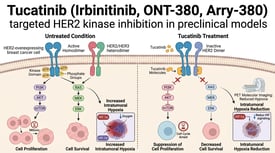
Human Epidermal Growth Factor Receptor 2 (HER2), also known as ErbB2 or Neu, is a member of the epidermal growth factor receptor (EGFR/ErbB) family. Unlike other members of this family, HER2 has no known high-affinity ligand; instead, it exists in a constitutively active conformation, making it the preferred dimerization partner for other ErbB receptors (HER1, HER3, and HER4). The HER2-HER3 heterodimer is particularly potent, as it strongly activates the PI3K/Akt/mTOR pathway, a key driver of cell survival and metabolism. HER2 also triggers the Ras/Raf/MEK/ERK pathway to promote proliferation. HER2 gene amplification and protein overexpression occur in approximately 15-20% of breast cancers and are also significant in gastric and gastroesophageal junction cancers. These HER2-positive tumors are historically associated with aggressive clinical behavior and poor prognosis, but the development of HER2-targeted therapies has dramatically shifted the treatment paradigm.
The classification of HER2 inhibitors includes monoclonal antibodies (mAbs), small-molecule tyrosine kinase inhibitors (TKIs), and antibody-drug conjugates (ADCs). Trastuzumab was the first mAb approved, targeting the extracellular domain IV of HER2 to inhibit downstream signaling and induce antibody-dependent cellular cytotoxicity (ADCC). Pertuzumab, another mAb, binds to domain II, preventing HER2 dimerization with other ErbB receptors. Small-molecule TKIs like lapatinib (a dual EGFR/HER2 inhibitor), neratinib, and tucatinib provide an alternative approach by inhibiting the intracellular kinase domain. Neratinib is an irreversible inhibitor, while tucatinib is highly selective for HER2, which helps minimize EGFR-related toxicities like rash and diarrhea. The most recent and perhaps most impactful advancement is the development of ADCs, such as Trastuzumab emtansine (T-DM1) and Trastuzumab deruxtecan (T-DXd).
T-DXd, in particular, features a high drug-to-antibody ratio and a cleavable linker that allows for a bystander effect, killing neighboring tumor cells regardless of their HER2 expression levels. Current research is expanding the use of HER2 inhibitors into HER2-low breast cancer, where T-DXd has shown remarkable efficacy, and into other malignancies like NSCLC and colorectal cancer harboring HER2 mutations or amplification. Despite these successes, resistance remains a challenge. Mechanisms include the expression of p95HER2 (a truncated form of the receptor), activation of the PI3K pathway via mutations (e.g., PIK3CA), or upregulation of alternative RTKs like MET or AXL. Combination therapies, such as pairing HER2 inhibitors with CDK4/6 inhibitors or immune checkpoint inhibitors, are being actively explored to overcome these hurdles. Furthermore, the management of specific toxicities, such as trastuzumab-induced cardiotoxicity and T-DXd-associated interstitial lung disease, is a critical component of clinical care.
The field continues to move toward more personalized and potent strategies, including bispecific antibodies and HER2-targeted CAR-T cell therapies, which aim to harness the power of the immune system to eradicate HER2-positive cells.