ERK Inhibitors
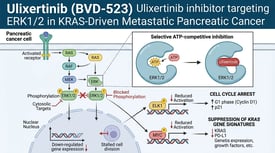
Extracellular signal-regulated kinases 1 and 2 (ERK1/2) are central components of the RAS-RAF-MEK-ERK mitogen-activated protein kinase (MAPK) signaling pathway, a crucial cascade that regulates fundamental cellular processes including cell proliferation, differentiation, survival, and migration. Upon activation by upstream kinases, specifically MEK1/2, ERK1/2 become phosphorylated and subsequently translocate to the nucleus and cytoplasm, where they phosphorylate a wide array of substrates. These substrates include transcription factors, cytoskeletal proteins, and other kinases, leading to profound changes in gene expression and cellular behavior. The MAPK pathway is frequently hyperactivated in human cancers, often due to mutations in key upstream components such as RAS (e.g., KRAS, NRAS) or RAF (e.g., BRAF), making it a prime target for therapeutic intervention. Beyond cancer, dysregulation of the ERK pathway is implicated in various inflammatory and neurological disorders, underscoring its broad physiological importance. The development of inhibitors targeting the MAPK pathway has been a significant success story in oncology.
While BRAF inhibitors (e.g., vemurafenib, dabrafenib) and MEK inhibitors (e.g., trametinib, cobimetinib, binimetinib) are approved and widely used, particularly in BRAF-mutant melanoma and other cancers, direct ERK inhibitors represent a more recent class of therapeutics. ERK inhibitors are designed to block the activity of ERK1/2, often as a strategy to overcome resistance to upstream BRAF or MEK inhibitors, or to target cancers driven by specific ERK activation mechanisms. Several ERK inhibitors, such as ulixertinib (BVD-523), ravoxertinib, and LTT462, have entered clinical trials for various advanced solid tumors, including melanoma, colorectal cancer, and non-small cell lung cancer. These compounds are typically ATP-competitive or allosteric inhibitors, aiming to directly block ERK kinase activity. While none have yet received regulatory approval, they have shown promising preclinical activity and are demonstrating clinical efficacy in specific patient populations, particularly in those who have developed resistance to earlier-generation MAPK pathway inhibitors. Key challenges in targeting ERK include the complex feedback loops within the MAPK pathway, which can lead to compensatory activation or resistance.
For example, inhibition of ERK can sometimes lead to reactivation of upstream MEK. Furthermore, the ubiquitous nature of the MAPK pathway means that ERK inhibitors can cause off-target effects and toxicities, with skin rash being a common side effect, similar to other MAPK pathway inhibitors. Inhibitors are primarily classified by their target within the pathway (e.g., BRAF, MEK, ERK) and their mechanism of action. To enhance therapeutic efficacy and overcome resistance, combination therapy strategies are extensively explored. ERK inhibitors are being combined with BRAF inhibitors, MEK inhibitors, PI3K inhibitors, or immune checkpoint inhibitors to achieve synergistic anti-tumor effects. The rationale is to block multiple nodes in the signaling network, prevent compensatory pathway activation, and broaden the therapeutic window.
The ongoing research into potent and selective ERK inhibitors, coupled with rational combination strategies, continues to expand the therapeutic options for patients with MAPK-driven cancers, particularly those resistant to earlier treatments.