FXR Agonists
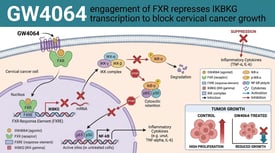
The Farnesoid X Receptor (FXR) is a ligand-activated nuclear receptor that serves as the primary sensor for bile acids in the human body. Upon activation by bile acids like chenodeoxycholic acid, FXR forms a heterodimer with the Retinoid X Receptor (RXR) and binds to specific DNA response elements to regulate the transcription of genes involved in bile acid synthesis, transport, and lipid and glucose metabolism. In the liver, FXR activation suppresses the expression of CYP7A1, the rate-limiting enzyme in bile acid synthesis, through the induction of Small Heterodimer Partner (SHP). In the intestine, FXR stimulates the production of Fibroblast Growth Factor 19 (FGF19), which travels to the liver to further inhibit bile acid production. This feedback loop is essential for preventing bile acid toxicity and maintaining metabolic homeostasis.
FXR agonists have emerged as a major therapeutic class for treating cholestatic liver diseases and metabolic disorders. Obeticholic acid (OCA), a semi-synthetic bile acid derivative, was the first FXR agonist to receive regulatory approval for the treatment of primary biliary cholangitis (PBC) in patients who are intolerant to or have an inadequate response to ursodeoxycholic acid. Beyond PBC, FXR agonists are being intensively investigated for the treatment of metabolic dysfunction-associated steatohepatitis (MASH), formerly known as NASH. While OCA showed histological improvements in the REGENERATE trial, its approval for MASH was hindered by concerns over side effects and long-term safety. FXR agonists are generally classified into two structural categories: steroidal and non-steroidal.
Steroidal agonists, like OCA, are based on the bile acid scaffold and tend to have high potency but may also cause off-target effects such as pruritus (itching) and elevations in LDL-cholesterol. Non-steroidal agonists, such as tropifexor, cilofexor, and nidufexor, were developed to offer improved physicochemical properties and potentially better safety profiles. Many of these are currently in Phase II and III clinical trials, either as monotherapies or in combination with other agents like GLP-1 receptor agonists or CCR2/5 antagonists. A significant challenge in the field is managing the dose-dependent pruritus and the lipid profile changes associated with potent FXR activation. Research is also exploring the role of FXR in the gut-liver axis and its potential impact on intestinal inflammation and colorectal cancer, as FXR signaling is often downregulated in these conditions.
Furthermore, the development of intestine-selective FXR agonists is an active area of study, aiming to harness the metabolic benefits of FGF19 induction while minimizing systemic side effects. As the prevalence of metabolic liver diseases continues to rise globally, FXR agonists remain a cornerstone of the developmental pipeline, with the potential to significantly alter the natural history of chronic liver injury and metabolic dysfunction.