Hedgehog/Smoothened Inhibitors
The Hedgehog (Hh) signaling pathway is a fundamental regulator of embryonic development, tissue regeneration, and stem cell maintenance. In the absence of Hh ligands (Sonic, Indian, or Desert Hedgehog), the transmembrane receptor Patched-1 (PTCH1) constitutively inhibits Smoothened (SMO), a G-protein coupled-like receptor. When an Hh ligand binds to PTCH1, this inhibition is relieved, allowing SMO to translocate to the primary cilium and trigger a complex intracellular signaling cascade. This cascade culminates in the activation and nuclear translocation of GLI transcription factors (GLI1, GLI2, and GLI3), which drive the expression of genes involved in cell proliferation, survival, and epithelial-mesenchymal transition. Aberrant activation of this pathway, often through mutations in PTCH1 or SMO, is a primary driver in several malignancies. The most well-established clinical association with dysregulated Hedgehog signaling is basal cell carcinoma (BCC), the most common form of skin cancer.
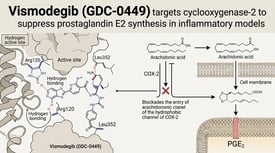
It is also critically involved in the pathogenesis of medulloblastoma, a common pediatric brain tumor, and has been implicated in the progression of various other cancers, including acute myeloid leukemia (AML), pancreatic cancer, and small cell lung cancer. Hedgehog/Smoothened inhibitors have revolutionized the treatment of advanced or metastatic BCC. Vismodegib was the first-in-class SMO inhibitor to receive FDA approval, followed by sonidegib. These agents bind directly to the heptahelical bundle of SMO, preventing its activation. Additionally, glasdegib was approved for use in combination with low-dose cytarabine for the treatment of newly diagnosed AML in elderly patients or those unfit for intensive chemotherapy. Inhibitors of this pathway are generally classified into SMO antagonists and downstream inhibitors, such as those targeting GLI proteins or the Hh ligands themselves.
While SMO inhibitors have shown remarkable efficacy, the development of secondary resistance is a significant clinical challenge. Mutations in the SMO receptor, such as the well-characterized SMO-D473H mutation, can prevent drug binding while maintaining constitutive signaling. To address this, next-generation SMO inhibitors and agents that target the pathway downstream of SMO, such as GLI inhibitors, are currently in preclinical and clinical development. Another major concern is the toxicity profile of Hh inhibitors; common side effects include muscle cramps, dysgeusia (taste disturbance), alopecia, and weight loss, which can lead to treatment discontinuation. Furthermore, because the pathway is essential for development, these drugs are potent teratogens. Current research strategies include the use of intermittent dosing schedules to manage toxicity and the exploration of combination therapies with other targeted agents, such as PI3K or MAPK inhibitors, to overcome resistance and enhance therapeutic efficacy.
The role of Hedgehog signaling in the tumor microenvironment and its contribution to the maintenance of cancer stem cells also remain key areas of active investigation.