HIF Inhibitors
Hypoxia-inducible factors (HIFs) are crucial transcription factors that orchestrate cellular adaptation to changes in oxygen availability, playing a pivotal role in both physiological processes and numerous pathological conditions. The core mechanism involves the oxygen-dependent regulation of HIF-alpha subunits (HIF-1alpha, HIF-2alpha, HIF-3alpha). Under normoxic conditions, HIF-alpha subunits are hydroxylated by prolyl hydroxylase domain (PHD) enzymes, marking them for ubiquitination by the von Hippel-Lindau (VHL) tumor suppressor protein and subsequent proteasomal degradation. In contrast, under hypoxic conditions, PHD activity is inhibited due to oxygen scarcity, leading to HIF-alpha stabilization, dimerization with the constitutively expressed HIF-beta subunit, and translocation to the nucleus. Here, the HIF-alpha/beta heterodimer binds to hypoxia-response elements (HREs) in the promoters of target genes, activating their transcription. This pathway regulates genes involved in angiogenesis (e.g., VEGF), erythropoiesis (e.g., EPO), glucose metabolism (e.g., GLUT1), cell proliferation, and survival, among others.
Aberrant HIF activation is implicated in a wide array of diseases. In cancer, sustained hypoxia within solid tumors drives HIF-1alpha and HIF-2alpha overexpression, promoting tumor growth, angiogenesis, metastasis, metabolic reprogramming, and resistance to chemotherapy and radiation. Beyond oncology, HIF dysregulation contributes to renal anemia (insufficient EPO production), ischemic diseases (e.g., stroke, myocardial infarction), pulmonary hypertension, and inflammatory disorders. Consequently, targeting the HIF pathway offers therapeutic potential for these diverse conditions. Research into HIF inhibitors has yielded significant progress. For renal anemia, prolyl hydroxylase inhibitors (PHIs) like roxadustat, vadadustat, and daprodustat have gained regulatory approval.
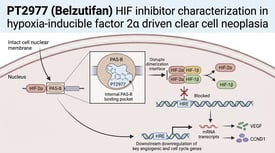
These PHIs stabilize HIF-alpha by inhibiting PHDs, thereby stimulating endogenous erythropoietin production. In oncology, direct HIF-2alpha inhibitors have emerged as a promising strategy. Belzutifan (MK-6482), an oral HIF-2alpha inhibitor, received FDA approval for treating VHL-associated renal cell carcinoma (RCC), pancreatic neuroendocrine tumors, and hemangioblastomas, demonstrating clinical efficacy by disrupting HIF-2alpha/HIF-beta dimerization. Numerous other HIF-1alpha and HIF-2alpha inhibitors, as well as compounds targeting upstream regulators or downstream effectors of the HIF pathway, are in various stages of preclinical and clinical development for a broad spectrum of cancers, including glioblastoma, hepatocellular carcinoma, and lung cancer. Inhibitors of the HIF pathway can be broadly classified by their mechanism of action: (1) PHD inhibitors (PHIs), which stabilize HIF-alpha for therapeutic benefit in anemia; (2) direct HIF-alpha inhibitors, which prevent HIF-alpha stabilization, dimerization, or DNA binding (e.g., HIF-2alpha specific inhibitors); and (3) indirect inhibitors that modulate upstream signaling pathways (e.g., mTOR inhibitors) or target HIF-regulated genes. Key research tool compounds include specific small molecule inhibitors and genetic models that manipulate HIF expression.
Challenges in developing HIF inhibitors include achieving isoform selectivity, minimizing off-target effects, and overcoming potential resistance mechanisms that might arise from compensatory pathways. For cancer therapy, combination strategies with chemotherapy, radiation, or immunotherapies are actively being explored to enhance anti-tumor efficacy and mitigate resistance, leveraging HIF's central role in tumor biology and the tumor microenvironment.