GSK-3 Inhibitors
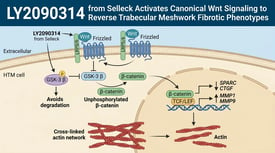
Glycogen synthase kinase 3 (GSK-3) is a unique and multifunctional serine/threonine kinase that exists as two isoforms, GSK-3-alpha and GSK-3-beta. Unlike most kinases, GSK-3 is constitutively active in resting cells and is primarily regulated through inhibitory phosphorylation by upstream kinases such as Akt. It is a key component of several major signaling pathways, most notably the Wnt/beta-catenin pathway, where it forms part of the destruction complex that targets beta-catenin for proteasomal degradation. Additionally, GSK-3 regulates glycogen synthesis, protein translation, and various transcription factors. Because of its broad range of substrates, dysregulation of GSK-3 is associated with a variety of human conditions, including type 2 diabetes, Alzheimer’s disease, bipolar disorder, and several types of cancer.
In neurodegenerative diseases, GSK-3-beta is known to phosphorylate tau protein, contributing to the formation of neurofibrillary tangles. In the context of oncology, its role is complex; it can act as either a tumor suppressor or an oncogene depending on the specific cancer type and cellular context. The development of GSK-3 inhibitors has a long history, starting with the discovery that lithium, a mainstay treatment for bipolar disorder, acts as a direct and indirect inhibitor of GSK-3. Since then, numerous small-molecule inhibitors have been developed and are classified based on their mechanism of action: ATP-competitive inhibitors, non-ATP-competitive inhibitors, and substrate-competitive inhibitors. Tideglusib, an irreversible non-competitive inhibitor, has been investigated in clinical trials for Alzheimer’s disease and progressive supranuclear palsy, although it has yet to achieve broad regulatory approval.
Other compounds like CHIR-99021 are widely used as research tools in stem cell biology to maintain pluripotency. A major challenge in the clinical development of GSK-3 inhibitors is the risk of off-target effects and potential oncogenicity. Since GSK-3 inhibition stabilizes beta-catenin, there is a theoretical concern that long-term use could promote the development of certain cancers, such as colorectal cancer. Furthermore, achieving isoform selectivity between the alpha and beta forms remains difficult due to the high conservation of their catalytic domains. Current research is exploring the potential of GSK-3 inhibitors in immuno-oncology, as they may enhance the activity of T cells and natural killer cells.
Combination therapies and the development of tissue-specific delivery systems are also being investigated to mitigate systemic toxicity. Despite the challenges, GSK-3 remains a highly attractive target due to its central role in diverse physiological processes, and ongoing efforts continue to refine the safety and efficacy of next-generation inhibitors.