Insulin Receptor Inhibitors
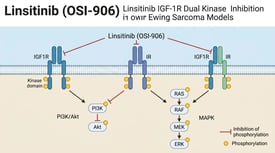
The Insulin Receptor (IR) is a transmembrane tetrameric glycoprotein with intrinsic tyrosine kinase activity, belonging to the receptor tyrosine kinase (RTK) superfamily. It consists of two extracellular alpha subunits that bind insulin and two transmembrane beta subunits containing the kinase domain. Upon insulin binding, the receptor undergoes a conformational change leading to autophosphorylation and the subsequent recruitment and activation of Insulin Receptor substrates (IRS-1 to 4). This triggers two main signaling cascades: the PI3K/Akt pathway, which regulates glucose transport and metabolism, and the Ras/MAPK pathway, which governs cell growth and differentiation. While insulin signaling is vital for life, its overactivation or the presence of insulin-secreting tumors necessitates the use of IR inhibitors. Insulin receptor inhibitors are primarily investigated for the treatment of hyperinsulinemic hypoglycemia, such as that caused by insulinomas (insulin-secreting pancreatic tumors) or rare genetic disorders like Nesidioblastosis.
Furthermore, the IR is frequently overexpressed in various cancers, including breast, prostate, and colorectal malignancies. In the oncogenic context, the IR—particularly its IR-A isoform—can promote tumor cell survival and resistance to conventional therapies by cross-talking with the insulin-like growth factor 1 receptor (IGF-1R). Therefore, IR inhibitors are being explored as potential anti-cancer agents, often in combination with other RTK inhibitors. The landscape of IR inhibitors includes several distinct classes: peptide antagonists, monoclonal antibodies, and small-molecule tyrosine kinase inhibitors (TKIs). S961 is a well-known high-affinity peptide antagonist used extensively in preclinical research to induce transient insulin resistance and hyperglycemia in animal models. In the realm of biologics, monoclonal antibodies like XmetA have been developed to specifically block the insulin-binding site.
These antibodies offer high specificity, reducing the risk of off-target effects on the closely related IGF-1R. Small-molecule TKIs, while potent, often struggle with selectivity between IR and IGF-1R due to the high structural homology of their kinase domains. Current research progress is focused on improving the selectivity of these inhibitors to avoid systemic toxicity. The most significant challenge in using IR inhibitors is the induction of severe hyperglycemia and metabolic ketoacidosis, as systemic blockade of insulin action prevents glucose uptake in muscle and adipose tissue while stimulating hepatic gluconeogenesis. To mitigate this, researchers are investigating "biased" inhibitors that might selectively block the mitogenic (MAPK) pathway while sparing the metabolic (PI3K) pathway, or using antibody-drug conjugates (ADCs) to deliver the inhibitory payload specifically to tumor cells. In clinical settings, there are currently no FDA-approved small-molecule IR inhibitors for systemic use due to the aforementioned metabolic risks.
However, they remain vital tools for understanding the molecular basis of insulin resistance and are being tested in early-phase trials for refractory solid tumors. The future of IR inhibition likely lies in precision medicine, where these agents are used briefly to manage acute hypoglycemia or as targeted components of complex oncology regimens.