JNK Inhibitors
The c-Jun N-terminal kinases (JNKs), also known as stress-activated protein kinases (SAPKs), are members of the mitogen-activated protein kinase (MAPK) family that play a central role in converting extracellular stimuli into a wide range of cellular responses. The JNK family consists of three isoforms: JNK1 and JNK2, which are ubiquitously expressed, and JNK3, which is primarily localized to the brain, heart, and testes. These kinases are activated by dual phosphorylation on threonine and tyrosine residues within a conserved Thr-Pro-Tyr motif by upstream kinases MKK4 and MKK7. Once active, JNKs phosphorylate various substrates, most notably the transcription factor c-Jun, which leads to the activation of the AP-1 transcription factor complex. This pathway is a critical mediator of apoptosis, inflammation, and cellular stress responses, and its dysregulation is implicated in numerous pathological conditions, including neurodegenerative diseases, metabolic disorders, and various types of cancer. In the context of neurodegeneration, JNK3 is a particularly attractive target due to its role in mediating neuronal cell death in Alzheimer’s and Parkinson’s diseases.
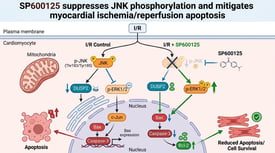
In metabolic diseases, JNK1 activation is linked to insulin resistance and obesity-induced inflammation. Despite the clear therapeutic potential, the development of JNK inhibitors has faced significant challenges. Most early inhibitors, such as the widely used research tool SP600125, were ATP-competitive small molecules that lacked sufficient selectivity, leading to significant off-target effects and toxicity. Clinical progress has been slow, with several candidates like CC-930 and CC-401 entering trials for idiopathic pulmonary fibrosis and leukemia, respectively, but failing to advance due to safety concerns or lack of efficacy. Current research is shifting toward the development of isoform-selective inhibitors and non-ATP-competitive allosteric inhibitors to improve safety profiles. Another innovative approach involves the use of peptide inhibitors, such as D-JNKI-1, which mimics the JNK-binding domain of the scaffold protein JIP-1 to competitively block substrate access.
These substrate-competitive inhibitors offer a high degree of specificity by targeting the unique interaction sites between JNK and its downstream targets. Classification of JNK inhibitors typically distinguishes between these ATP-competitive small molecules and the newer generation of peptide or allosteric modulators. A major challenge in JNK-targeted therapy is the dual role of JNK in cancer; while it often promotes apoptosis and acts as a tumor suppressor, it can also promote cell survival and proliferation in certain contexts, depending on the tissue type and the duration of activation. This complexity necessitates a precision medicine approach, where JNK inhibition is tailored to specific disease stages and genetic backgrounds. Future research is focused on identifying biomarkers of JNK activity and developing brain-penetrant inhibitors for neurological indications. Combination strategies that pair JNK inhibitors with other targeted therapies or anti-inflammatory agents are also being explored to enhance therapeutic windows and overcome the compensatory mechanisms that often limit the efficacy of single-agent kinase inhibition.