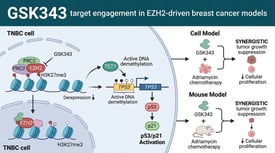
EZH2 Inhibitors
Enhancer of Zeste Homolog 2 (EZH2) is the catalytic subunit of the Polycomb Repressive Complex 2 (PRC2), which plays a pivotal role in epigenetic gene silencing by tri-methylating lysine 27 of histone H3 (H3K27me3). This modification leads to chromatin condensation and the repression of genes involved in cell fate determination and differentiation. EZH2 is frequently overexpressed or mutated in a wide range of human cancers. Gain-of-function mutations, particularly at the Y641 residue, are common in follicular lymphoma and diffuse large B-cell lymphoma (DLBCL), leading to abnormally high levels of H3K27me3 and the silencing of tumor suppressor genes. In solid tumors like prostate, breast, and bladder cancer, EZH2 overexpression is often associated with increased invasiveness, metastasis, and poor clinical outcomes. Furthermore, EZH2 has been implicated in the maintenance of cancer stem cells and the suppression of anti-tumor immunity. These findings have established EZH2 as a high-priority target for therapeutic intervention.
EZH2 inhibitors are primarily classified as S-adenosyl-L-methionine (SAM)-competitive small molecules. These compounds bind to the catalytic SET domain of EZH2, preventing the binding of the methyl donor SAM and thereby inhibiting the enzyme's methyltransferase activity. The most notable success in this field is Tazemetostat (EPZ-6438), which became the first EZH2 inhibitor to receive FDA approval for the treatment of epithelioid sarcoma and relapsed/refractory follicular lymphoma. Other potent inhibitors in clinical or preclinical development include GSK126, CPI-1205, and SHR2554. These inhibitors have shown the ability to induce cell cycle arrest and differentiation in EZH2-dependent cancer models. A key concept in EZH2 therapy is "synthetic lethality," particularly in the context of ARID1A-mutated cancers. ARID1A is a component of the SWI/SNF remodeling complex, which normally antagonizes PRC2; when ARID1A is lost, cells become exquisitely dependent on EZH2 activity for survival.
Despite the clinical success of Tazemetostat, challenges such as the emergence of resistance and limited efficacy in some solid tumors remain. Resistance can arise through secondary mutations in the EZH2 SET domain that prevent drug binding or through the compensatory upregulation of EZH1, a closely related homolog. To address this, dual EZH1/2 inhibitors are being developed to provide more comprehensive suppression of H3K27 methylation. Additionally, combination therapy is a major focus of current research. EZH2 inhibitors are being evaluated in combination with chemotherapy, targeted agents like BCL-2 inhibitors, or immune checkpoint inhibitors. The rationale for the latter is that EZH2 inhibition can enhance the expression of tumor antigens and Th1-type cytokines, potentially turning "cold" tumors "hot." Another emerging strategy involves the use of EZH2-targeting PROTACs, which offer the advantage of degrading the entire PRC2 scaffold rather than just inhibiting its catalytic activity. As the therapeutic landscape for EZH2 inhibitors continues to expand, the focus is on identifying predictive biomarkers to select patients most likely to benefit from these epigenetic modulators.