LATS Inhibitors
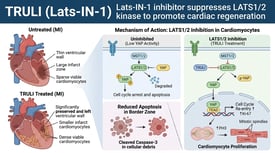
LATS1 and LATS2 (Large Tumor Suppressor 1 and 2) are serine/threonine kinases that function as the core components of the Hippo signaling pathway, a highly conserved pathway that regulates organ size, cell proliferation, and apoptosis. The primary mechanism of LATS involves the phosphorylation of the transcriptional co-activators YAP (Yes-associated protein) and TAZ (Transcriptional co-activator with PDZ-binding motif). When LATS1/2 are active, they phosphorylate YAP and TAZ, leading to their cytoplasmic sequestration by 14-3-3 proteins or their subsequent ubiquitin-mediated degradation. This prevents YAP/TAZ from entering the nucleus and interacting with TEAD transcription factors, thereby inhibiting the expression of genes that promote cell survival and proliferation. In many cancers, the Hippo pathway is inactivated, leading to the hyper-activation of YAP/TAZ, which drives tumorigenesis, epithelial-to-mesenchymal transition (EMT), and drug resistance. However, in the context of regenerative medicine, transiently inhibiting LATS1/2 is a highly attractive strategy.
By inhibiting LATS, YAP/TAZ can translocate to the nucleus and stimulate the proliferation of endogenous stem cells or cardiomyocytes, potentially facilitating the repair of damaged tissues such as the heart after a myocardial infarction or the liver in cases of chronic injury. The development of LATS inhibitors is a relatively recent endeavor in pharmacology. One of the most notable tool compounds is TRULI, a small-molecule inhibitor that targets the ATP-binding pocket of LATS1 and LATS2 with high affinity. TRULI has demonstrated the ability to promote cell proliferation in various mammalian tissues, including the intestinal epithelium and the heart, providing a proof-of-concept for Hippo-targeted regenerative therapies. Another class of inhibitors includes those that target the upstream kinases MST1 and MST2, such as XMU-MP-1, which indirectly reduces LATS activity. Research progress is currently in the preclinical stage, with significant efforts focused on improving the selectivity of these compounds to avoid off-target effects on other AGC family kinases.
Inhibitors are generally classified by their chemical scaffolds, such as pyrazolo[3,4-d]pyrimidines or other heterocyclic structures, and by their mechanism of action, whether they are ATP-competitive or allosteric. A major challenge in developing LATS inhibitors for clinical use is the inherent risk of oncogenesis; since LATS is a tumor suppressor, long-term inhibition could potentially lead to uncontrolled cell growth and cancer. Therefore, current research emphasizes the need for localized or transient delivery systems to limit the duration of LATS inhibition. Combination therapies that pair LATS inhibitors with other growth factors or tissue-engineering approaches are also being explored to maximize regenerative outcomes while minimizing systemic toxicity. As the field matures, the focus is shifting toward identifying biomarkers that can predict the response to LATS inhibition and developing more stable, bioavailable analogs of current lead compounds. Future clinical applications may include treating heart failure, promoting wound healing, or enhancing the expansion of organoids for personalized medicine.