EPZ015666 inhibitor (GSK3235025) targeting PRMT5 in MTAP-deficient tumors
Copy code to add this image to your page
Protein Arginine Methyltransferase 5 (PRMT5) functions as the primary catalytic enzyme responsible for symmetric dimethylation of arginine residues (sDMA) on histone proteins and non-histone substrates involved in pre-mRNA splicing and signal transduction. The discovery of EPZ015666 (GSK3235025) represented a critical advancement in characterizing this epigenetic target. As a potent, SAM-competitive and peptide-substrate-competitive tool, the EPZ015666 inhibitor binds the PRMT5-MEP50 complex with nanomolar affinity, blocking methyl group transfer to substrate proteins. Detailed characterization in a validated chemical probes repository established its utility for dissecting arginine methylation cascades in hematologic and solid malignancies under controlled laboratory conditions.
Despite high biochemical potency, first-generation agents face key pharmacodynamic limitations in vivo. Broad inhibition of PRMT5 across normal somatic tissues induces hematopoietic toxicity, particularly anemia and neutropenia. Furthermore, pan-PRMT5 inhibition indiscriminately suppresses target methylation in tumor-infiltrating lymphocytes. In functional immune assays, non-selective compounds like GSK3326595 or early substrate-competitive molecules impair T-cell receptor activation, suppress interleukin-2 synthesis, and diminish cytotoxic CD8+ T-cell proliferation. Consequently, narrow therapeutic windows have historically constrained the translational development of active-site PRMT5 inhibitors.
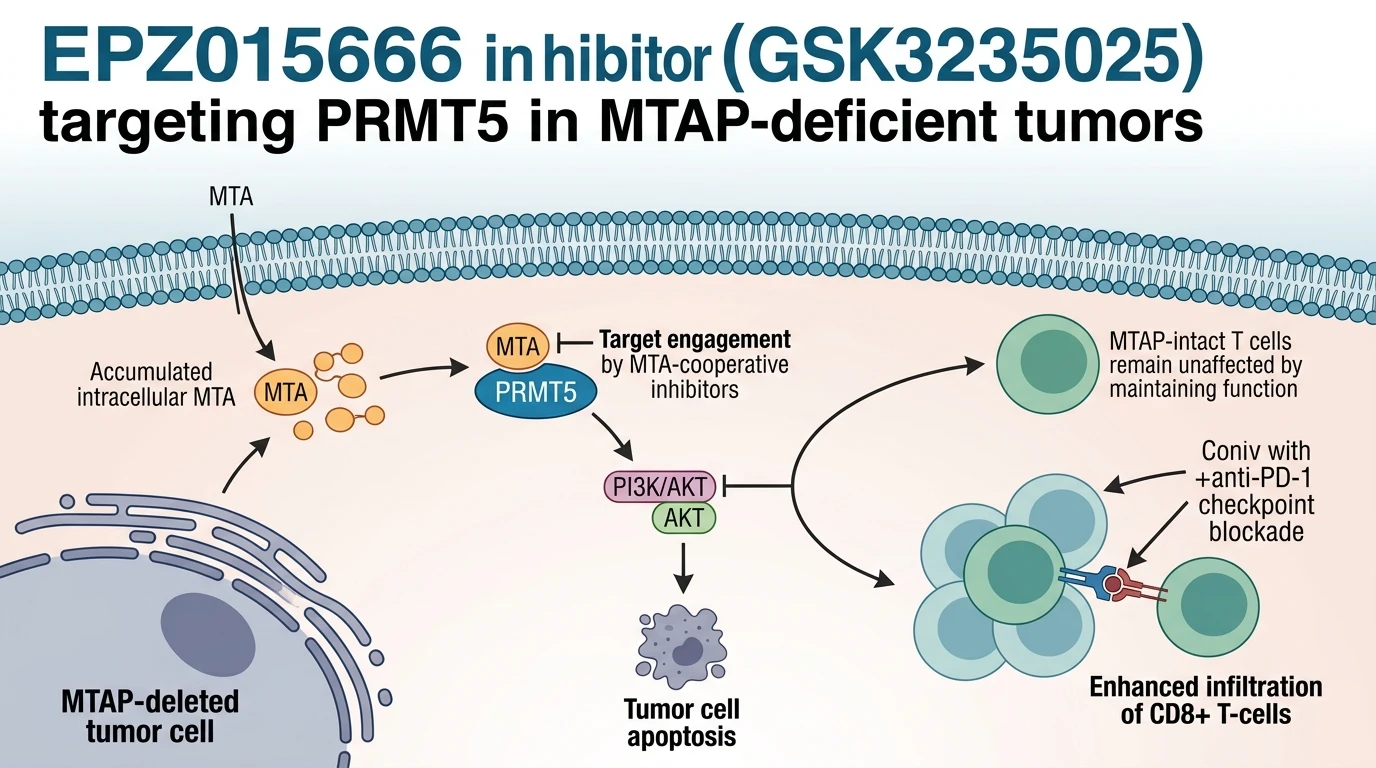
A unique metabolic vulnerability arises in malignancies harboring homozygous deletion of the methylthioadenosine phosphorylase (MTAP) gene. Located on chromosome 9p21, MTAP is frequently co-deleted with CDKN2A across glioblastoma, pancreatic ductal adenocarcinoma, and non-small cell lung carcinoma. Loss of MTAP activity leads to intracellular accumulation of its metabolic substrate, S-methyl-5'-thioadenosine (MTA). Intracellular MTA concentrations rise up to fifty-fold in MTAP-deleted cells. Excess MTA binds to the SAM-binding pocket of PRMT5, creating a distinct biochemical state designated as the PRMT5-MTA complex.
Second-generation MTA-cooperative PRMT5 inhibitors exploit this structural intermediate. Molecules such as MRTX1719 bind preferentially to the PRMT5-MTA complex rather than uncomplexed PRMT5. This cooperative mechanism yields high therapeutic selectivity for MTAP-null cancer cells over normal host tissues. In MTAP-intact non-malignant cells, MTA levels remain low due to rapid enzymatic conversion by MTAP, preventing high-affinity inhibitor binding. Consequently, MTA-cooperative agents spare normal tissues, including circulating immune cells.
Multi-omic profiling reveals that selective PRMT5 engagement produces distinct downstream signaling consequences. Transcriptomic and proteomic analyses confirm selective suppression of the PI3K AKT signaling pathway in MTAP-deficient tumor models. Disruption of spliceosome assembly impairs transcript stability for key pathway node regulators. This targeted activity suppresses phosphorylation of AKT at Ser473 and Thr308 within MTAP-null lines, while MTAP-wildtype cells maintain unperturbed signaling cascades.
Crucially, MTA-cooperative inhibition preserves adaptive immune responsiveness in the tumor microenvironment. Because cytotoxic T cells retain functional MTAP expression, second-generation inhibitors do not impair T-cell proliferation or effector cytokine release. In syngeneic murine tumor models, selective PRMT5 inhibition sensitizes MTAP-null tumors to T-cell-mediated lysis. Combination with anti-PD-1 immune checkpoint blockade yields synergistic tumor regression and durable immunologic memory, successfully decoupling antitumor efficacy from dose-limiting immunotoxicity.
Pharmacological Evaluation and Selective Pathway Modulation
Copy code to add this image to your page
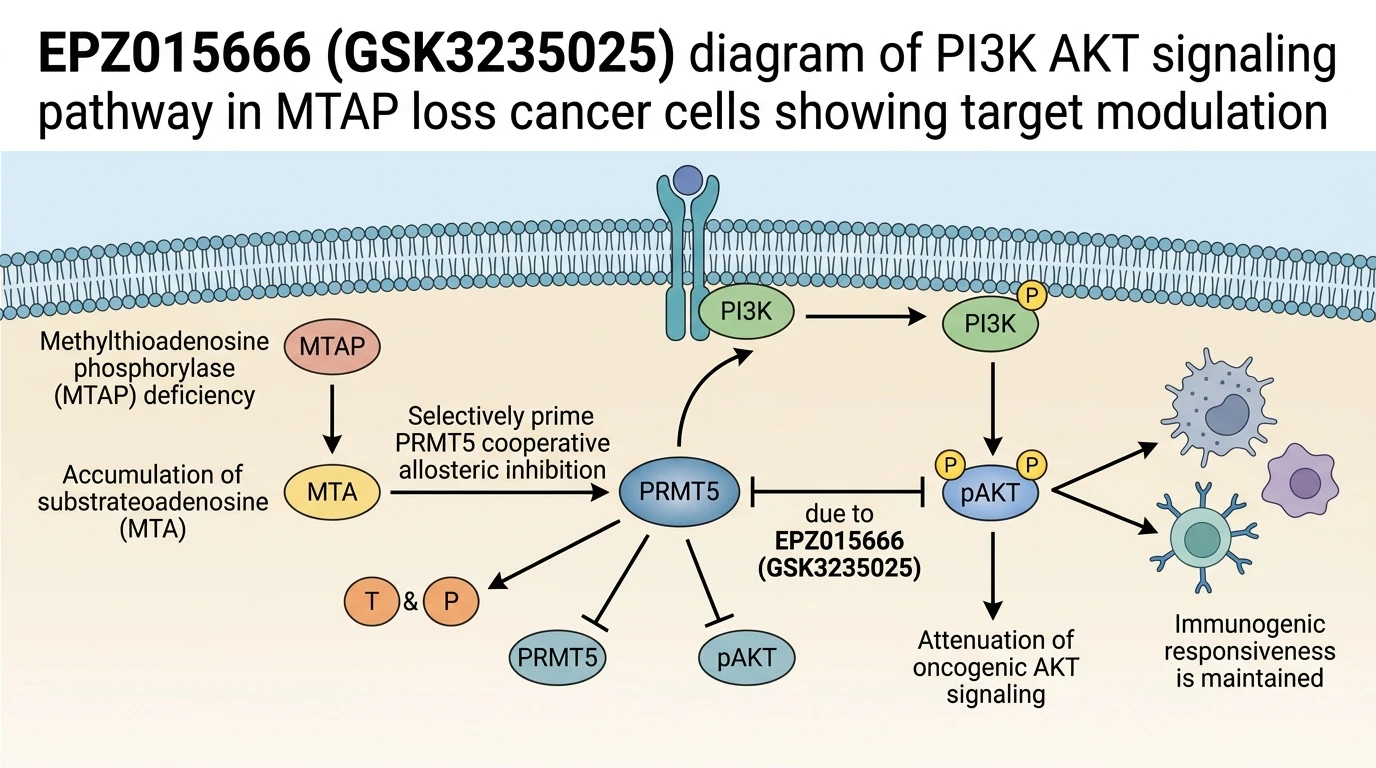
MTA accumulation in MTAP-loss tumors creates a targetable vulnerability in PRMT5. Second-generation MTA-cooperative inhibitors selectively target this complex, suppressing downstream PI3K AKT signaling in cancer cells while sparing MTAP-intact immune cells. This selective inhibition restores T-cell-mediated cytotoxicity and enhances sensitivity to anti-PD-1 therapy, offering superior efficacy over non-selective PRMT5 blockade.
Selective PI3K AKT Pathway Suppression in MTAP-Deficient Malignancies
High-throughput proteomic profiling demonstrates that MTA-cooperative PRMT5 inhibition preferentially destabilizes the PI3K AKT signaling pathway in MTAP-deleted tumor cells. Under tested in vitro assay conditions, selective target engagement disrupts pre-mRNA splicing of essential upstream regulatory kinases. Phosphorylation of AKT at Ser473 decreased significantly within twelve hours of exposure. In contrast, MTAP-intact non-tumorigenic control lines exhibited minimal changes in AKT activation. The traditional EPZ015666 inhibitor lacks this metabolic selectivity, causing equal target suppression regardless of cellular MTAP status. These observations establish that MTA accumulation serves as an essential biochemical cofactor for selective therapeutic response.
Preservation of T-Cell Effector Function and Immune Checkpoint Synergy
Non-selective PRMT5 blockade compromises primary T-cell activation and cytokine secretion. Comparative immunophenotyping reveals that MTA-cooperative molecules avoid this off-target immunosuppression. Within syngeneic murine carcinoma models, treatment preserved CD8+ T-cell viability and interferon-gamma production. Tumor cell sensitivity to antigen-specific cytotoxic T-lymphocyte killing increased markedly. Dual therapy combining MTA-cooperative inhibition with anti-PD-1 antibodies produced complete response rates in forty percent of treated animals. The EPZ015666 inhibitor baseline profile provides a stark contrast, where unselective PRMT5 inhibition impedes concurrent anti-PD-1 efficacy. Pharmacodynamic markers confirmed sustained target engagement within MTAP-null xenograft tissues throughout dosing intervals.