Sirpiglenastat (DRP-104) antagonist targets glutamine metabolism pathways in solid tumors
Copy code to add this image to your page
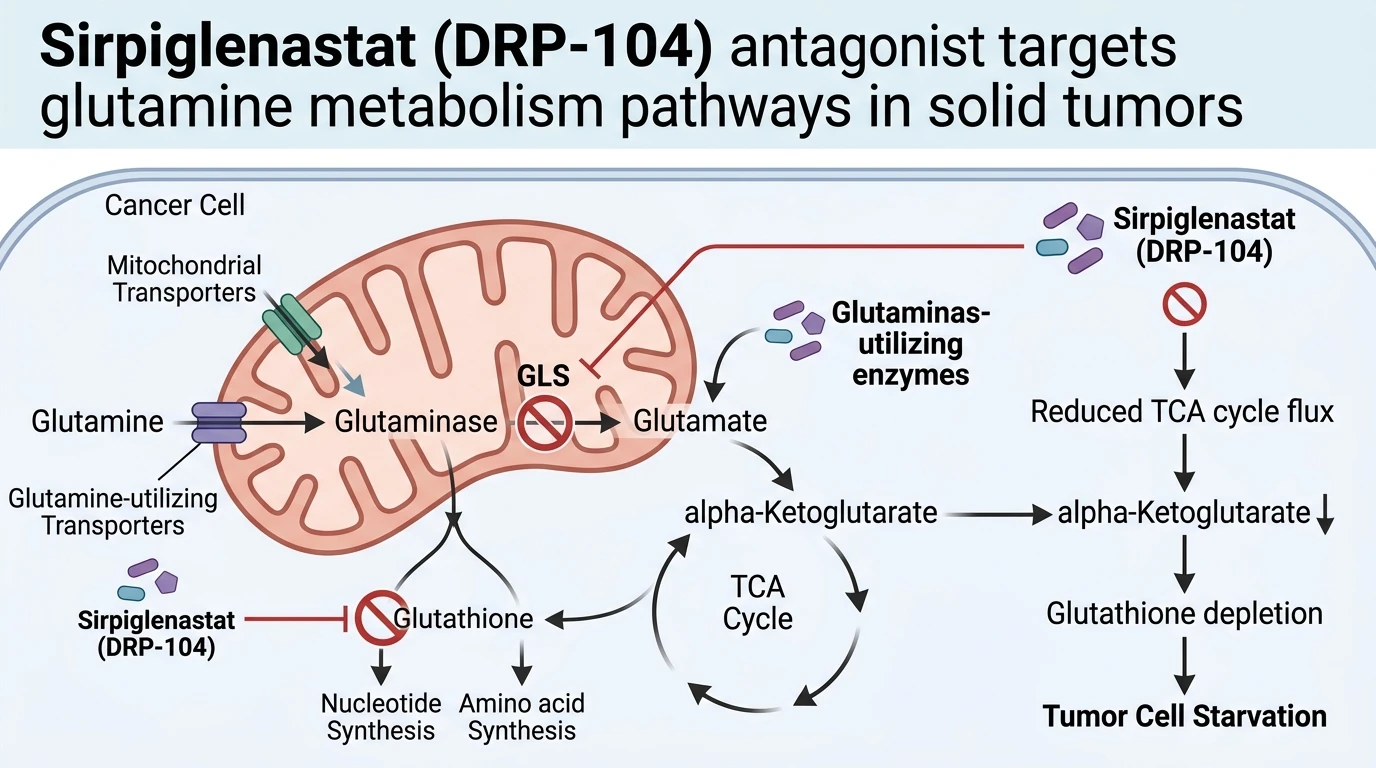
Sirpiglenastat (DRP-104) is an orally bioavailable, broad-spectrum glutamine antagonist prodrug derived from 6-diazo-5-oxo-L-norleucine (DON). Engineerd to overcome systemic toxicities associated with native DON, DRP-104 remains inactive in circulation until preferential bioactivation within target neoplastic tissue. By mimicking the molecular structure of glutamine, the active payload binds competitively and covalently to the catalytic active sites of glutamine-utilizing enzymes, including glutaminase, CTP synthase, and phosphoribosylformylglycinamidine synthase. Under tested in vitro assay conditions, this multitarget inhibition halts amido nitrogen transfer required for de novo purine and pyrimidine biosynthesis, suppressing cellular nucleic acid accumulation.
At the subcellular level, the DRP-104 antagonist disrupts mitochondrial energetics by cutting off carbon flux into the tricarboxylic acid (TCA) cycle. Cancer cells frequently exhibit elevated glutaminolysis, relying on glutamine-derived glutamate to form alpha-ketoglutarate, an intermediate that maintains oxaloacetate levels for oxidative phosphorylation. Blocking this entry route starves the mitochondrial matrix of essential reducing equivalents, such as NADH and FADH2. In patient-derived cell models, treatment with Sirpiglenastat (DRP-104) triggers a rapid reduction in basal and maximal oxygen consumption rates. Concurrently, depletion of intracellular glutamate diminishes glutathione synthesis, inducing profound oxidative stress by compromising cellular NADPH-dependent redox buffering systems.
Preclinical evaluations in pancreatic ductal adenocarcinoma (PDAC) models provide empirical verification of the antitumor profile of DRP-104. In murine PDAC xenografts, monotherapy with DRP-104 achieved significant tumor growth inhibition. Crucially, this therapeutic benefit manifested in immunocompromised models, proving that tumor regression operates via direct metabolic starvation independent of host adaptive immune signaling. Harvested tumor tissue analyses confirmed marked reductions in intra-tumoral nucleotide pools, TCA cycle intermediates, and cellular energy charge. Furthermore, liver and gastrointestinal tissue profiles confirmed acceptable safety windows, reflecting the tissue-selective cleavage mechanism built into the prodrug structure.
Translational progress for Sirpiglenastat (DRP-104) continues in clinical settings under Phase I/II evaluation (NCT04471415) for patients harboring advanced solid malignancies. Preliminary data suggest favorable pharmacokinetic parameters, prolonged target residence time, and manageable toxicity profiles across treated cohorts. Pharmacodynamic biomarkers in peripheral blood and bio-cleaved payload concentrations in tumor biopsies align with therapeutic glutamine metabolic suppression. Ongoing clinical investigations aim to establish definitive response rates across biomarker-selected tumor subpopulations and evaluate synergistic efficacy alongside complementary standard-of-care agents.
Therapeutic Evaluation and Pharmacological Characterization
Copy code to add this image to your page
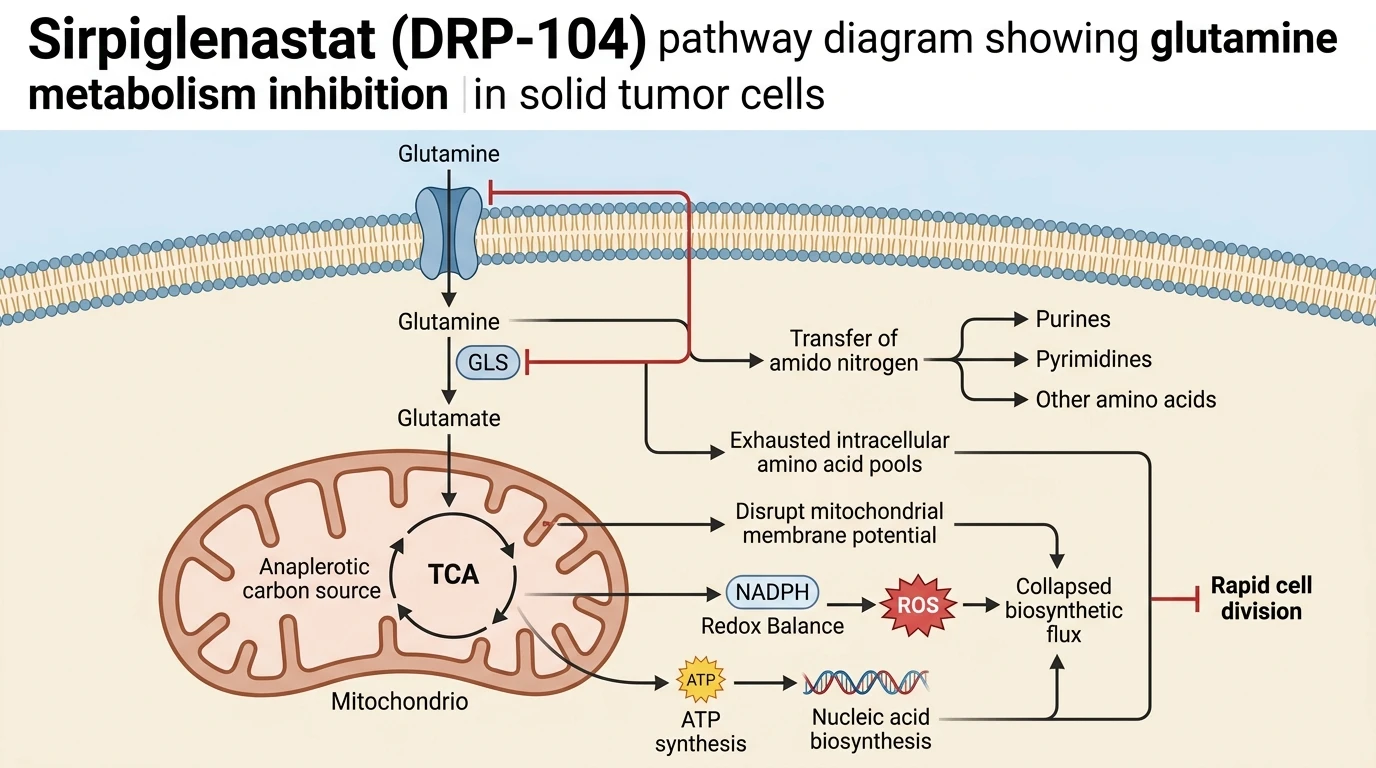
Sirpiglenastat (DRP-104) is a broad-spectrum glutamine antagonist prodrug that selectively targets glutamine-utilizing enzymes and glutaminase. By mimicking glutamine structure, it covalently blocks key enzymatic steps required for TCA cycle anaplerosis, nucleotide biosynthesis, and redox balance. In preclinical models, DRP-104 starves solid tumor cells, decreases oxidative phosphorylation, and inhibits tumor growth independently of host immune activity.
Glutamine Flux Suppression in Murine Xenograft Models
Continuous administration of the DRP-104 antagonist attenuated systemic and intra-tumoral glutamine utilization in immunodeficient PDAC xenografts. Neoplastic lesion volume decreased significantly compared to vehicle-treated controls. Intracellular metabolite profiling revealed a pronounced depletion of alpha-ketoglutarate, glutamate, and downstream pyrimidine intermediates; this metabolic deficit forced compensatory upregulation of alternative nutrient salvage pathways. Mitochondrial respiratory control ratios fell sharply within twenty-four hours of initial dosing. The selectivity margin remained intact throughout the dosing schedule. While these observations remain to be validated in randomized clinical cohorts, current data highlight profound metabolic collapse following prolonged target engagement.
Inhibition of Mitochondrial TCA Cycle Anaplerosis
Targeted inhibition of glutamine-utilizing enzymes by Sirpiglenastat (DRP-104) disrupts mitochondrial respiration and redox stability in patient-derived solid tumor lines. Cellular viability dropped sharply under glucose-restricted culturing conditions. The DRP-104 antagonist covalently binds the active site of glutaminase; this binding blocks glutamate synthesis and suppresses subsequent entry into the tricarboxylic acid cycle. Consequently, intracellular glutathione pools decreased by more than sixty percent, leading to elevated accumulation of cellular reactive oxygen species—an effect that sensitized resistant cell lines to oxidative apoptosis. Metabolic fluxes through hexosamine biosynthetic pathways ceased within hours. These preclinical findings define clear mechanistic boundary conditions for therapeutic target engagement in glutamine-dependent malignancies.