KC7F2 inhibitor targeted inhibition of HIF-1α attenuates endothelial CTTN promoter activation
Copy code to add this image to your page
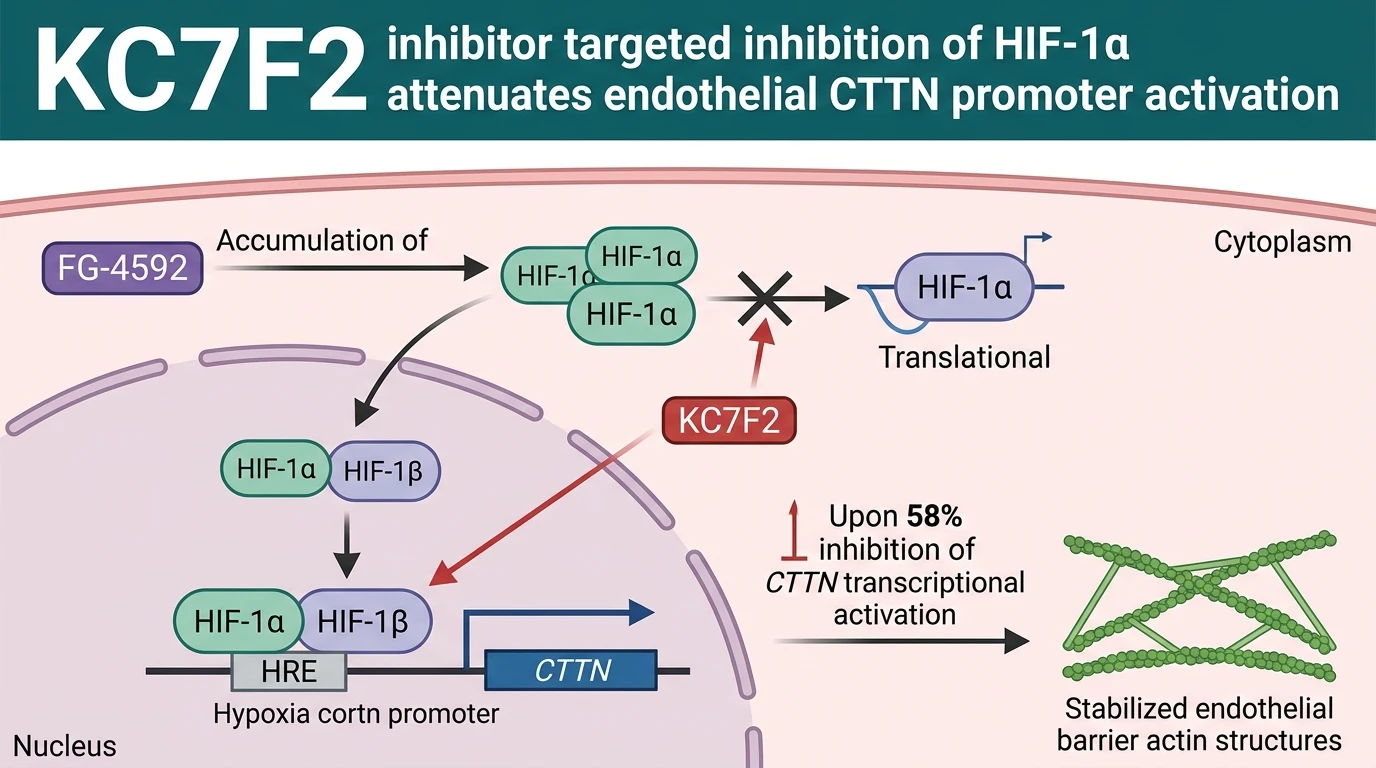
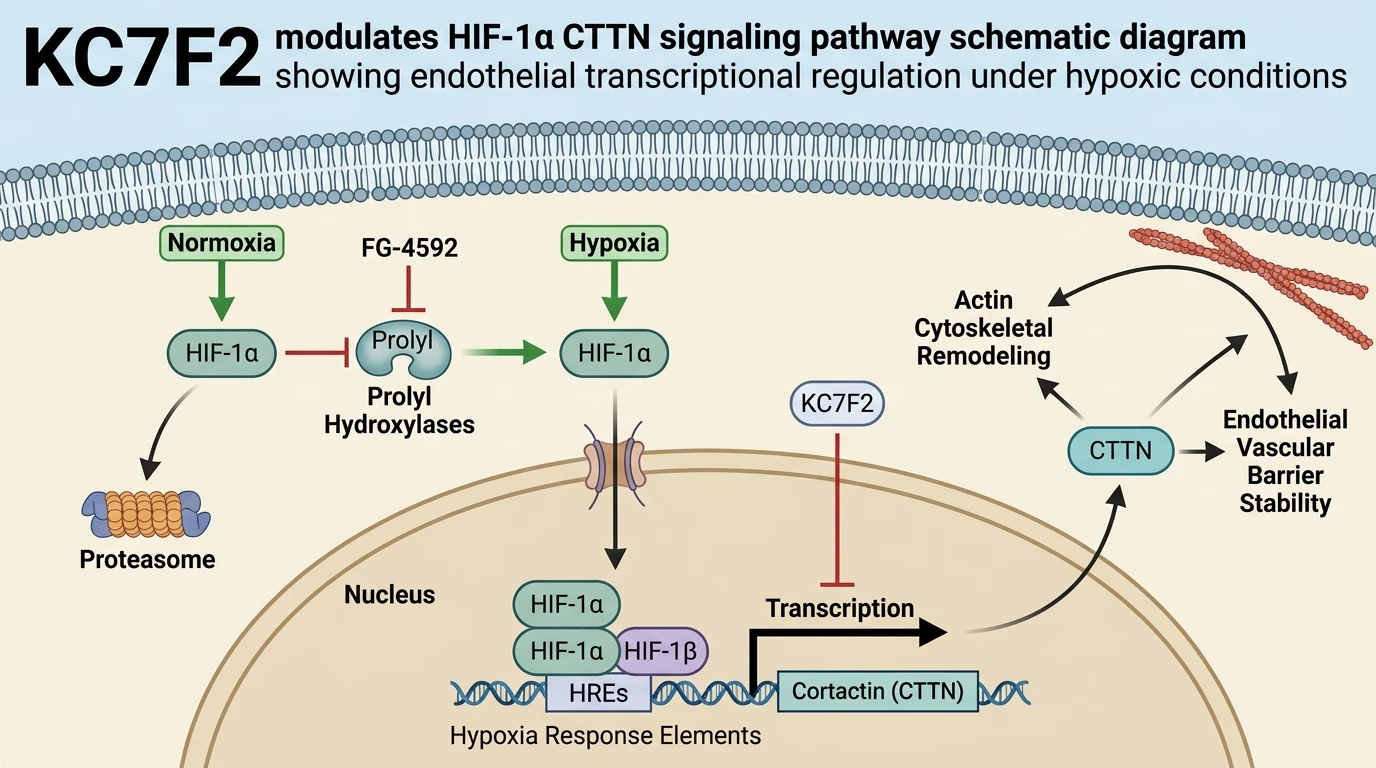
In human pulmonary artery endothelial cells (HPAECs), cellular adaptation to reduced oxygen availability relies heavily on the transcription factor hypoxia-inducible factor-1α (HIF-1α). Under normoxic conditions, prolyl hydroxylase domain (PHD) enzymes hydroxylate specific prolyl residues (Pro402 and Pro564) on HIF-1α. This post-translational modification targets HIF-1α for von Hippel-Lindau (VHL)-mediated polyubiquitination and rapid degradation via the 26S proteasome. Pharmacological inhibition of PHDs using the small-molecule agonist FG-4592 bypasses oxygen-dependent degradation. Stabilized HIF-1α rapidly accumulates in the cytoplasm, translocates into the nucleus, heterodimerizes with HIF-1β, and binds conserved 5'-RCGTG-3' hypoxia response elements (HREs) in target gene promoters. Among these downstream targets, the cortactin gene (CTTN) encodes an essential actin-binding monomeric protein that orchestrates cortical actin polymerization, cell-cell junction maintenance, and pulmonary vascular barrier integrity.
Quantitative promoter-reporter assays in cultured HPAECs demonstrate that FG-4592-induced HIF-1α stabilization significantly upregulates CTTN promoter activity. Specifically, stimulation with FG-4592 yields an approximate 2.3-fold increase in CTTN promoter-driven luciferase activity compared to vehicle control groups. Cortactin localized at endothelial cell-cell contacts interacts directly with F-actin and the Arp2/3 complex, facilitating microfilament branching necessary for endothelial barrier stability. Consequently, the observed 2.3-fold transcriptional surge indicates that HIF-1α functions as a direct upstream regulator of CTTN promoter expression during hypoxic signaling, modulating the structural apparatus governing vascular permeability.
Co-administration of the small-molecule HIF-1α inhibitor KC7F2 markedly attenuates this transcriptional response. At a working concentration of 40 μM, treatment with the KC7F2 inhibitor reduces FG-4592-stimulated CTTN promoter activity by 58%. Mechanistically, KC7F2 operates primarily by inhibiting HIF-1α protein translation, preventing the accumulation of functional HIF-1α protein without decreasing HIF-1α mRNA abundance or directly inhibiting upstream prolyl hydroxylases. Under tested in vitro assay conditions, this 58% suppression confirms that CTTN promoter activation by FG-4592 requires intact HIF-1α translational output rather than parallel HIF-independent pathways.
The suppression of HIF-1α-mediated CTTN expression carries important implications for microvascular pharmacology during acute lung injury and hypoxic stress. Cortactin dysregulation directly impacts endothelial cell retraction, paracellular gap formation, and leukocyte transendothelial migration. While baseline cortactin expression supports resting endothelial barrier architecture, excessive or rapid HIF-1α-driven CTTN transcriptional surges can alter localized actin remodeling. Chemical intervention with KC7F2 provides a controlled method to evaluate how transient variations in HIF-1α activity alter endothelial cytoskeletal transcription.
At the molecular level, the CTTN promoter contains functional HRE consensus motifs that recruit the HIF-1α/HIF-1β transcription factor complex upon nuclear translocation. Binding of stabilized HIF-1α recruits co-activators such as p300/CBP, initiating local chromatin remodeling and RNA polymerase II assembly. By suppressing HIF-1α protein synthesis, KC7F2 depletes the nuclear pool of HIF-1α, thereby preventing co-activator assembly at the CTTN gene locus. This targeted mechanism of action sets KC7F2 apart from broad-spectrum transcriptional inhibitors, offering a selective strategy to probe hypoxia-responsive promoter networks in human vascular endothelium.
It remains essential to delineate verified empirical endpoints from inferred physiological outcomes. The 58% decrease in CTTN promoter reporter activity proves robust transactivation blockade at the DNA-protein level; nevertheless, the translation of this promoter-level inhibition into altered protein half-life, paracellular solute flux, or transendothelial electrical resistance (TEER) requires empirical validation across varied hypoxic durations. Additionally, potential kinetic differences between transient chemical inhibition by KC7F2 and genetic knockdown of HIF-1α must be recognized. At 40 μM in primary HPAECs, KC7F2 demonstrates targeted regulatory control, establishing a mechanistic bridge between HIF-1α translational regulation and cortactin-mediated vascular barrier dynamics.
Transcriptional Regulation and Endothelial Barrier Pharmacology
Copy code to add this image to your page
KC7F2 acts as a specific inhibitor of HIF-1α by suppressing its protein translation without altering mRNA levels or prolyl hydroxylase activity. In human pulmonary artery endothelial cells (HPAECs), HIF-1α stabilization via FG-4592 increases cortactin (CTTN) promoter activity by 2.3-fold. Co-treatment with 40 μM KC7F2 attenuates this promoter activation by 58%, establishing direct HIF-1α-mediated transcriptional regulation of CTTN, a key structural determinant of endothelial barrier integrity during hypoxia.
Suppression of FG-4592-Induced CTTN Promoter Activation
Endothelial exposure to the prolyl hydroxylase inhibitor FG-4592 induces robust stabilization of HIF-1α protein in human pulmonary artery endothelial cells (HPAECs). This stabilization produces an approximate 2.3-fold increase in CTTN promoter luciferase activity over basal levels. Promoter activation was significantly reversed following pharmacological intervention. Co-treatment with 40 μM KC7F2 suppressed FG-4592-stimulated CTTN promoter transactivation by 58%. The KC7F2 inhibitor effectively disrupts HRE-driven promoter assembly without inducing overt cellular toxicity in HPAECs under tested assay conditions. Downstream promoter reporter activity declined precipitously. This substantial decrease confirms that elevated CTTN promoter activity relies strictly on HIF-1α signaling cascades rather than off-target actions of prolyl hydroxylase blockade. These observations demonstrate precise transcriptional control within the primary endothelial context.
Attenuated HIF-1α Translation Modulates Endothelial Cytoskeletal Transcription
Cortactin functions as a core regulator of endothelial barrier integrity by orchestrating actin filament rearrangement at inter-endothelial junctions. Under hypoxic conditions, hyperactivation of the CTTN promoter driven by stabilized HIF-1α alters normal cytoskeletal architecture. Treatment with the KC7F2 inhibitor reduces HIF-1α protein translation, thereby curbing aberrant CTTN expression. Cellular viability remained stable throughout the experimental timeframe. By restricting the intracellular HIF-1α pool, KC7F2 prevents hyper-activation of HRE motifs in the CTTN promoter region. However, whether this transcriptional suppression fully prevents hypoxia-induced endothelial hyperpermeability in vivo remains to be evaluated in relevant animal models of inflammatory lung injury. The current empirical metrics confirm target engagement at the promoter level.