UNC0379 from Selleck Target SETD8 Methyltransferase to Inhibit Hepatocellular Carcinoma Cell Growth
Copy code to add this image to your page
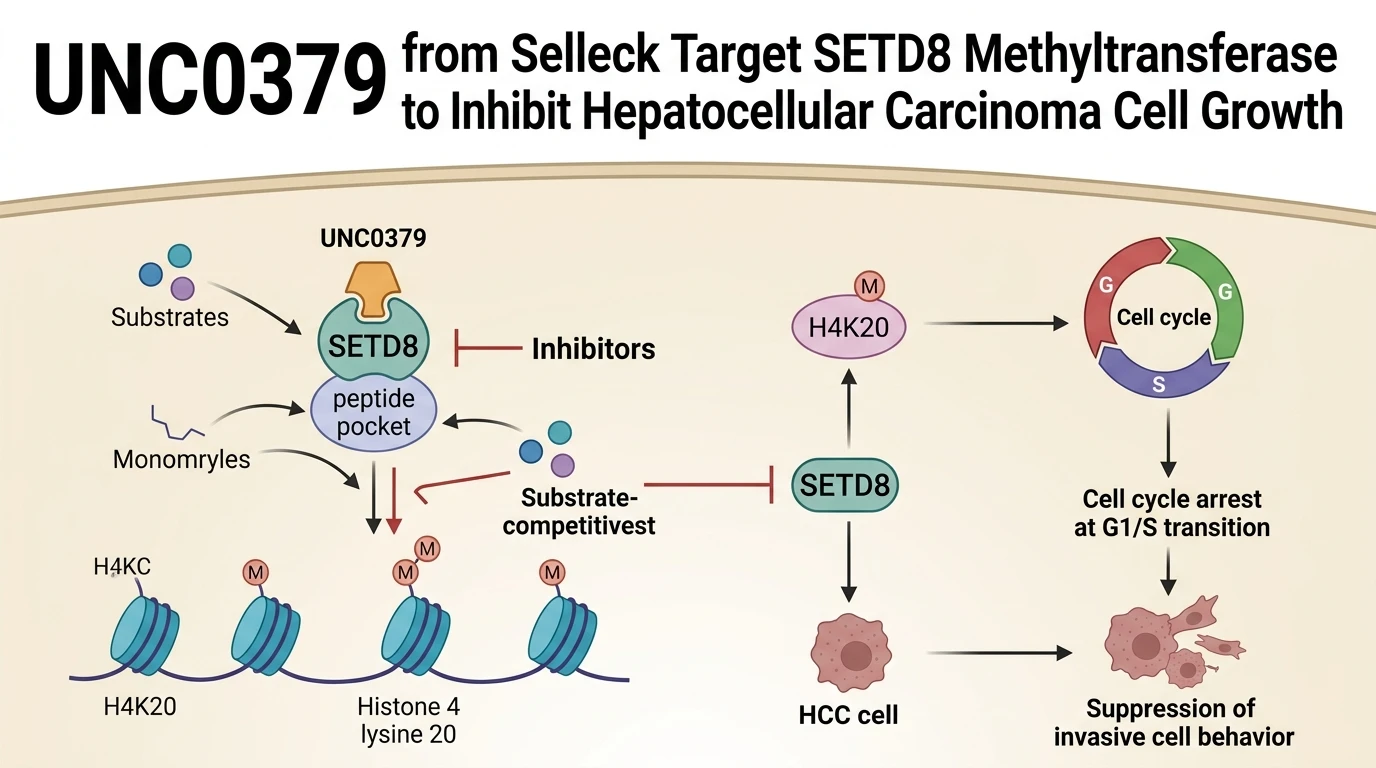
SETD8, also designated as KMT5A or PR-SET7, functions as the sole known lysine methyltransferase capable of catalyzing monomethylation of histone H4 at lysine 20 (H4K20me1). This precise post-translational modification exerts profound control over higher-order chromatin folding, transcriptional modulation, DNA damage response fidelity, and cell cycle transition kinetics. Clinical expression profiling indicates that SETD8 is frequently overexpressed in hepatocellular carcinoma tissue relative to adjacent non-tumorous liver parenchyma. Elevated SETD8 abundance correlates with adverse clinical outcomes, including reduced overall survival and shortened disease-free survival in affected patient cohorts. Epigenetic dysregulation mediated by SETD8 overactivity promotes unchecked mitotic entry and invasive phenotypic traits in liver malignancies. Targeting SETD8 enzymatic activity using small-molecule chemical probes represents a valid therapeutic vector for dissecting epigenetic dependencies in liver cancer. In biochemical profiling, UNC0379 demonstrates potent, selective inhibition of SETD8 methyltransferase activity. Utilizing single-cell epigenetic profiling resolution reveals how epigenetic heterogeneity dictates specific compound sensitivity across distinct cellular subpopulations. Characterization of target binding mechanics demonstrates that UNC0379 from Selleck operates through a substrate-competitive mechanism rather than competing with the S-adenosyl-L-methionine (SAM) cofactor. Specifically, the molecule selectively occupies the peptide-binding groove of SETD8, effectively impeding the access of histone H4 substrate tails. This mode of competitive occupation blocks the transfer of methyl groups without non-specifically perturbing adjacent SAM-dependent enzymes. Biochemical selectivity assays confirm that UNC0379 displays high selectivity for SETD8 over a broad panel of alternative histone lysine and arginine methyltransferases. At physiologically relevant concentrations in vitro, UNC0379 induces a dose-dependent depletion of endogenous H4K20me1 levels in treated hepatocellular carcinoma cell lines. Loss of global H4K20 monomethylation directly alters local chromatin accessibility at specific genomic loci governing cell cycle checkpoints. Consequently, treated cells exhibit pronounced G1/S phase cell cycle arrest. The failure to progress into S phase prevents nuclear DNA replication and terminates cellular proliferation. Downstream cellular assays demonstrate significant attenuation of clonogenic survival capacity following treatment with UNC0379. Beyond cell cycle suppression, SETD8 inhibition via UNC0379 attenuates metastatic capabilities in hepatocellular carcinoma models. In transwell migration and Matrigel invasion assays, compound treatment markedly reduces cell motility and invasive matrix penetration. Mechanistically, this suppression of invasion correlates with downregulated expression of key epithelial-to-mesenchymal transition effectors and matrix-degrading enzymes. These phenotypic alterations occur without acute, non-specific cytotoxicity at functional inhibitory doses. Evaluating small-molecule SETD8 inhibitors within preclinical frameworks yields essential insights into hepatocarcinogenesis dependencies. Small-molecule engagement of the SETD8 peptide pocket by UNC0379 demonstrates the viability of targeting non-oncogene addiction pathways in solid tumors. Because H4K20me1 dynamics regulate specific stages of the cell cycle, transient enzymatic blockade presents an attractive window for therapeutic intervention. Continued investigation of UNC0379 provides a mechanistic benchmark for developing second-generation catalytic inhibitors aimed at chromatin-modifying enzymes.
Pharmacological Evaluation and Epigenetic Characterization in Carcinoma
Copy code to add this image to your page
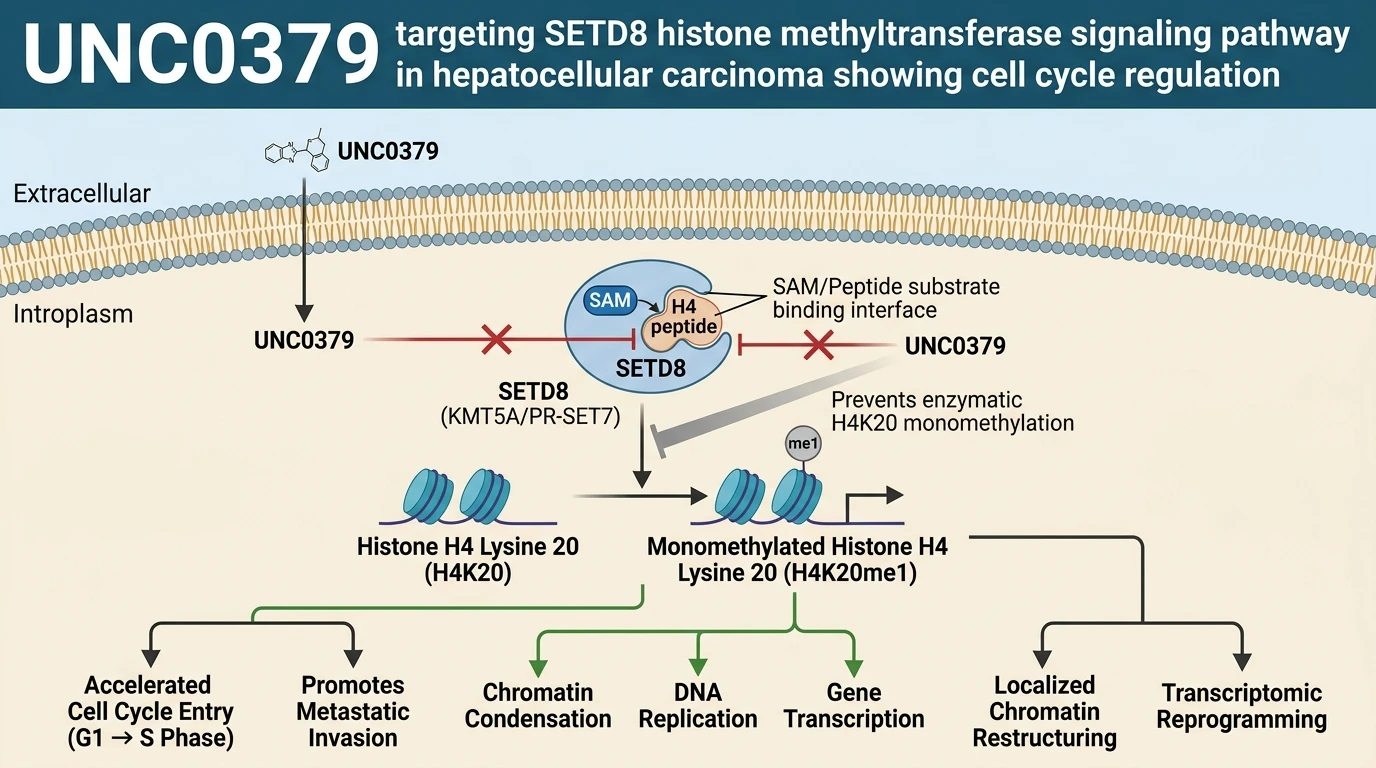
UNC0379 acts as a selective, substrate-competitive inhibitor of SETD8 (KMT5A/PR-SET7) lysine methyltransferase. By occupying the peptide binding pocket, it prevents H4K20 monomethylation. This competitive blockade disrupts chromatin organization, halts G1/S cell cycle transition, and suppresses cellular invasion in hepatocellular carcinoma models under tested in vitro conditions.
Substrate-Competitive Binding Selective for SETD8 Peptide Channel
Biochemical characterization confirms that UNC0379 engages SETD8 through substrate-competitive binding kinetics. Kinetic analyses establish an inhibitory concentration range operating selectively against SETD8 without inhibiting cofactor-binding methyltransferases. The compound binds directly within the histone peptide substrate channel. This prevents H4 tail entry. Global intracellular H4K20me1 levels diminish rapidly following exposure. Epigenetic profiling confirms that other histone methylation marks, including H3K4me3 and H3K27me3, remain unaltered. Selectivity across a panel of related methyltransferases exceeds 100-fold. These observations validate target specificity within tested liver cancer cellular models.
Cell Cycle Arrest and Suppression of Invasive Phenotypes
Inhibition of SETD8 methyltransferase activity by UNC0379 from Selleck produces defined functional cellular phenotypes. Flow cytometry shows a prominent accumulation of hepatocellular carcinoma cells in the G1 phase. Transition into S phase is severely suppressed. Cell proliferation rates decline rapidly upon treatment. In addition, Matrigel invasion assays reveal reduced transwell migration. Suppression of invasion occurs alongside decreased transcript levels of matrix metalloproteinases. These pharmacological effects demonstrate that targeting SETD8 impairs both proliferative expansion and metastatic traits in experimental cell cultures.