Obeticholic Acid (INT-747) agonist engagement of FXR in NASH therapy
Copy code to add this image to your page
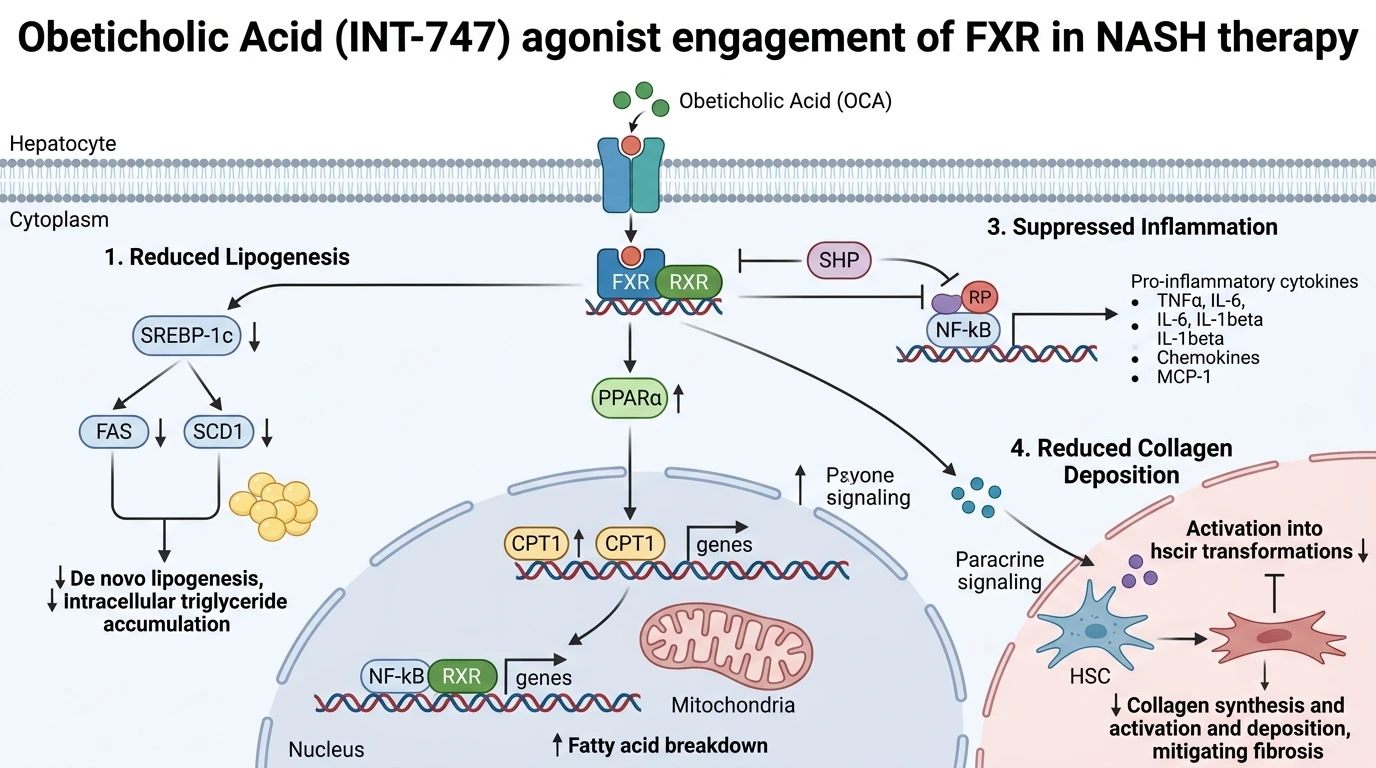
Obeticholic acid (INT-747) is a semi-synthetic bile acid derivative engineered via the addition of a 6α-ethyl group to the natural endogenous ligand chenodeoxycholic acid (CDCA). This specific structural modification confers approximately 100-fold greater agonist potency for the Farnesoid X Receptor (FXR; NR1H4) compared to native bile acids under standard in vitro binding assay conditions. FXR operates as a ligand-activated transcription factor expressed abundantly in metabolically active tissues, primarily hepatocytes, enterocytes, and immune cells within the liver microenvironment. Upon binding an agonist, the ligand-binding domain of FXR undergoes a conformational shift that facilitates dissociation of corepressors (such as SMRT and NCoR) and promotes recruitment of coactivators including SRC-1. The activated receptor forms a functional heterodimer with the Retinoid X Receptor alpha (RXRα), binding directly to inverted repeat-1 (IR-1) or direct repeat-1 (DR-1) response elements located within promoter regions of target genes.
Within parenchymal hepatocytes, engagement by an INT-747 agonist initiates transcriptional cascades that recalibrate lipid, carbohydrate, and bile acid metabolism. FXR activation induces expression of Small Heterodimer Partner (SHP; NR0B2), an atypical nuclear receptor lacking a DNA-binding domain. SHP physically interacts with and represses liver receptor homolog-1 (LRH-1) and hepatocyte nuclear factor 4 alpha (HNF4α). This protein interaction selectively inhibits transcription of cholesterol 7α-hydroxylase (CYP7A1), the rate-limiting enzyme in hepatic bile acid synthesis, thereby preventing intracellular bile salt overload and metabolic cytotoxicity. Concurrently, FXR downregulates sterol regulatory element-binding protein 1c (SREBP-1c) and carbohydrate response element-binding protein (ChREBP). Suppression of these master transcriptional regulators leads to reduced expression of downstream lipogenic enzymes, including acetyl-CoA carboxylase (ACC), fatty acid synthase (FAS), and stearoyl-CoA desaturase-1 (SCD1). Gluconeogenic flux is similarly attenuated through repression of phosphoenolpyruvate carboxykinase (PEPCK) and glucose-6-phosphatase (G6Pase).
Beyond lipogenic inhibition, FXR activation upregulates peroxisome proliferator-activated receptor alpha (PPARα) and its downstream transcriptional targets, including carnitine palmitoyltransferase 1A (CPT1A) and acyl-CoA oxidase 1 (ACOX1). This upregulation accelerates mitochondrial and peroxisomal fatty acid beta-oxidation, decreasing intracellular triglyceride retention within hepatocytes. Simultaneously, FXR regulates hepatic bile salt transport by stimulating the bile salt export pump (BSEP; ABCB11) at the canalicular membrane while repressing the sodium-taurocholate cotransporting polypeptide (NTCP; SLC10A1) at the basolateral membrane, promoting overall bile flow homeostasis.
In non-parenchymal cells, particularly hepatic stellate cells (HSCs) and Kupffer cells, FXR signaling exerts pronounced anti-inflammatory and anti-fibrotic actions. Activation of FXR represses nuclear factor kappa B (NF-κB) nuclear translocation, diminishing transcription of pro-inflammatory cytokines such as TNF-α, IL-1β, and IL-6. In quiescent and activated HSCs, FXR engagement downregulates transforming growth factor-beta 1 (TGF-β1) signaling and connective tissue growth factor (CTGF) expression. Consequently, HSC transdifferentiation into alpha-smooth muscle actin (α-SMA)-positive myofibroblasts is inhibited. This blockade halts excessive synthesis and crosslinking of extracellular matrix proteins, specifically collagen type I alpha 1 (COL1A1) and collagen type III alpha 1 (COL3A1).
Additionally, intestinal FXR activation by INT-747 triggers transcription and secretion of endocrine fibroblast growth factor 19 (FGF19 in humans). Enterocyte-derived FGF19 enters the portal circulation and binds to the hepatic fibroblast growth factor receptor 4 (FGFR4)/β-Klotho coreceptor complex. This signaling cascade reinforces CYP7A1 repression via ERK1/2 phosphorylation, forming a dual enterohepatic feedback loop that coordinates systemic metabolic homeostasis.
Clinical Efficacy and Pharmacological Safety Characterization
Copy code to add this image to your page
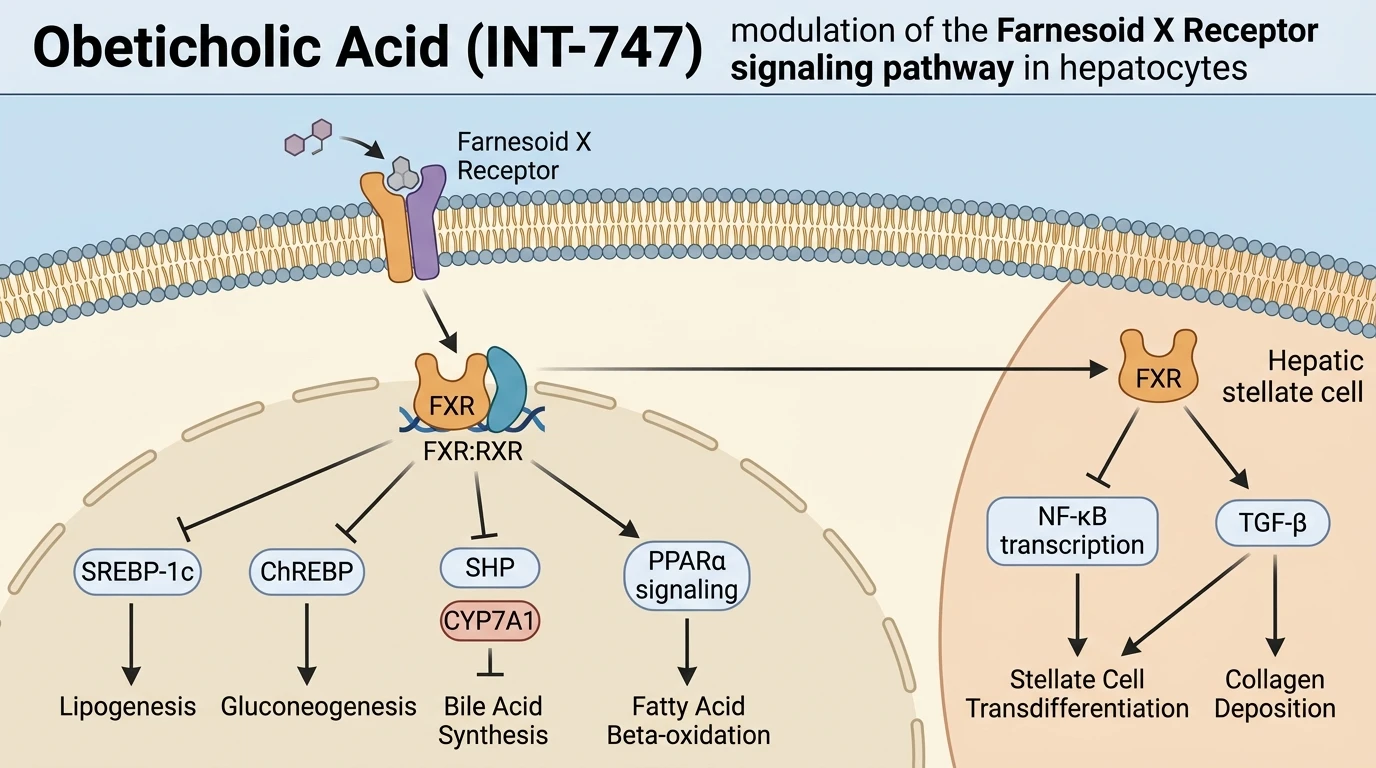
Obeticholic Acid (INT-747) acts as a selective agonist of the Farnesoid X Receptor (FXR). Receptor binding induces heterodimerization with RXR, suppressing SREBP-1c and ChREBP to reduce lipogenesis and gluconeogenesis. SHP upregulation inhibits CYP7A1 to limit bile acid synthesis, while enhanced PPARα expression accelerates fatty acid beta-oxidation. In non-parenchymal cells, FXR suppresses NF-κB signaling and inhibits hepatic stellate cell transdifferentiation, directly reducing extracellular collagen deposition and hepatic fibrogenesis.
Histological Fibrosis Regression in Phase 2b and 3 Clinical Trials
Clinical trials evaluated the efficacy of Obeticholic Acid (INT-747) in nonalcoholic steatohepatitis. In the randomized Phase 2b FLINT trial, daily oral administration yielded significant improvements in the nonalcoholic fatty liver disease activity score compared to placebo treatment. Histological analysis revealed reduced lobular inflammation and steatosis. Subsequent Phase 3 REGENERATE trial data validated these histological gains, achieving primary endpoints for liver fibrosis improvement without worsening steatohepatitis. Circulating ALT and AST transaminase levels dropped within weeks. Biopsy specimens confirmed decreased collagen deposition. This selective INT-747 agonist response demonstrates that FXR modulation directly curtails progressive extracellular matrix accumulation in human liver tissue.
Lipid Profile Shifts and Dose-Dependent Pruritus Development
FXR activation produces distinct systemic physiological secondary effects. Dose-dependent pruritus represented the most frequent adverse event, leading to treatment interruption or discontinuation in a subset of clinical trial subjects. Plasma lipid profiles shifted significantly during treatment. Low-density lipoprotein cholesterol concentrations increased early, while high-density lipoprotein cholesterol levels exhibited modest decreases across study cohorts. Statin co-administration managed lipoprotein shifts effectively. Binding measurements cataloged in Farnesoid X Receptor ligand databases confirm target engagement at therapeutic doses. Hepatic function requires routine longitudinal monitoring.
Decompensated Cirrhosis Restrictions and Post-Marketing Safety Mandates
Post-marketing safety signals identified grave risks in advanced cirrhosis. Patients with decompensated liver disease experienced severe adverse hepatotoxicity events, triggering updated warnings and strict regulatory drug contraindications. Compromised hepatic clearance elevates systemic drug exposure. Consequently, treatment is strictly restricted to non-cirrhotic NASH patients or those with compensated early-stage disease under close medical supervision. Baseline liver testing remains clinically mandatory.