SNDX-5613 (Revumenib) Inhibits KMT2A-Menin Binding in Overexpressed HOXA MEIS1 Acute Leukemias
Copy code to add this image to your page
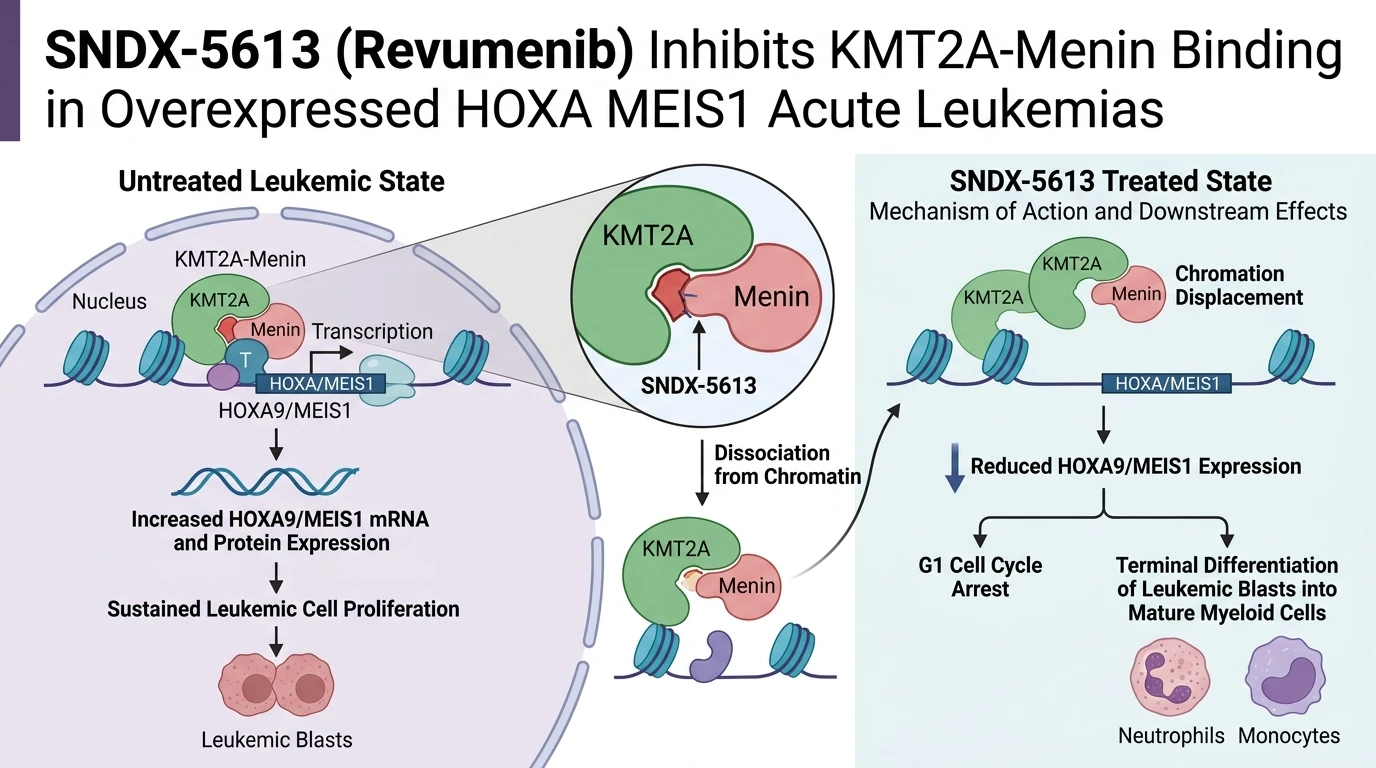
Chromosomal translocations involving the KMT2A gene (lysine methyltransferase 2A) occur in approximately 5 to 10 percent of acute leukemias, encompassing both acute myeloid leukemia and acute lymphoblastic leukemia phenotypes. The resulting KMT2A fusion proteins lose their native histone methyltransferase catalytic domain while retaining the amino-terminal motif responsible for binding menin, a nuclear scaffolding protein encoded by the MEN1 gene. Physical association between menin and KMT2A fusions forms an essential oncogenic driver complex. This complex localizes to specific chromatin loci, recruiting the super elongation complex and DOT1L to maintain constitutive transcription of key leukemogenic drivers, notably HOXA9 and MEIS1. High-affinity binding between menin and the N-terminal motif of KMT2A is necessary to sustain the self-renewal capacity of leukemic stem cells. Disruption of this single protein-protein interface represents a targeted therapeutic strategy designed to reverse transcriptional dysregulation and induce myeloid differentiation. SNDX-5613 (Revumenib) was developed as an orally active small-molecule inhibitor engineered to selectively occlude the KMT2A-binding pocket on menin.
Molecular docking and structural analyses indicate that SNDX-5613 inserts directly into the central hydrophobic binding cavity of menin, mimicking key amino acid contacts normally established by the KMT2A N-terminus. Binding of SNDX-5613 induces a conformational shift that competitively displaces KMT2A fusion proteins from the menin scaffolding complex. Biochemical binding assays demonstrate nanomolar affinity, effectively disrupting the interaction without disrupting unrelated scaffolding functions of menin. Displacement of the fusion protein impairs chromatin occupancy at the HOXA locus within hours of drug exposure. Consequently, messenger RNA levels of HOXA9 and MEIS1 decline rapidly in treated cell lines carrying KMT2A rearrangements or NPM1 mutations.
Loss of HOXA9 and MEIS1 expression triggers cell cycle arrest and activates terminal differentiation cascades in leukemic lymphoblasts and myeloblasts. Phenotypically, leukemic cell populations treated with SNDX-5613 undergo morphological changes characteristic of mature granulocytic or monocytic lineages, accompanied by upregulation of surface markers such as CD11b and CD14. Apoptosis ensues secondary to the cessation of oncogenic driver gene transcription. Crucially, this target engagement strategy spares non-rearranged normal hematopoietic progenitor cells, maintaining an acceptable safety profile relative to non-targeted cytotoxic chemotherapy.
In early clinical evaluation documented in recent literature on the clinical development of revumenib, monotherapy with SNDX-5613 achieved an overall response rate of 64% in patient populations with heavily pretreated relapsed or refractory KMT2A-rearranged acute leukemia. Complete remission with partial hematologic recovery (CR/CRh) was observed in 23% of participants. Molecular monitoring revealed that 61% of responding patients achieved measurable residual disease negativity. Pharmacokinetic profiles demonstrated predictable oral bioavailability with consistent plasma exposure across dosing cohorts.
The administration of SNDX-5613 monotherapy and combination therapy is accompanied by specific class-related adverse events. Grade 3 or higher QTc prolongation represents a primary dose-limiting toxicity requiring electrocardiographic monitoring and electrolyte management. Differentiation syndrome, a phenomenon linked to rapid myeloid maturation, occurred in a subset of patients and was successfully managed with corticosteroids and temporary treatment holds. Gastrointestinal disturbances and cytopenias were also frequently recorded. To enhance durability and overcome resistance mechanisms, combination regimens have been evaluated. In the SAVE trial evaluating SNDX-5613 combined with ASTX727 (decitabine/cedazuridine) and venetoclax in relapsed or refractory acute myeloid leukemia and mixed phenotype acute leukemia, the combination achieved an overall response rate of 82% and a CR/CRh rate of 48%. Among patients achieving CR/CRh in this combination trial, 88% attained measurable residual disease negativity. These results substantiate the therapeutic value of targeting the KMT2A-menin interface across refractory acute leukemia subtypes.
Pharmacological Characterization and Clinical Efficacy Evaluation
Copy code to add this image to your page
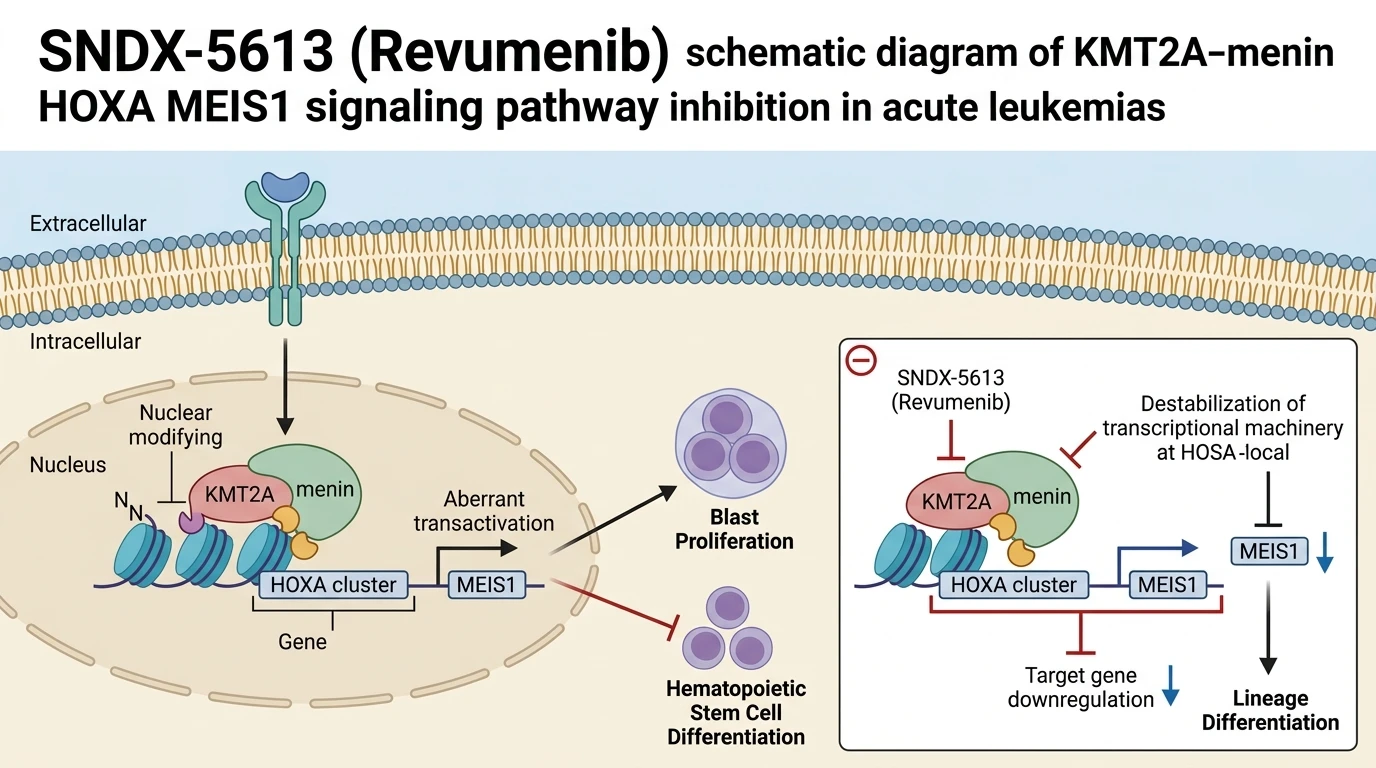
SNDX-5613 (Revumenib) acts as a selective small-molecule inhibitor of the KMT2A-menin protein-protein interaction. By binding to the central hydrophobic cavity of menin, SNDX-5613 competitively displaces KMT2A fusion proteins and associated scaffolding complex members from chromatin targets. This target occlusion downregulates transactivation of leukemogenic driver genes, specifically HOXA cluster members and MEIS1. Suppressed expression of these homeobox genes leads to G1 cell cycle arrest, inhibition of blast proliferation, and activation of terminal myeloid or lymphoid differentiation cascades in acute leukemias harboring KMT2A rearrangements or NPM1 gene mutations.
Target Engagement and Transcriptional Suppression in Blasts
Disruption of the KMT2A-menin interface by SNDX-5613 induces immediate downstream transcriptional repression of oncogenic driver genes. In patient-derived cell models, targeted displacement of the fusion protein yields a steady drop in HOXA9 and MEIS1 transcript levels within 12 hours. This rapid transcript clearance triggers cell cycle arrest at the G1 phase. Blast proliferation ceased rapidly in culture. Downstream flow cytometry demonstrated robust upregulation of mature myeloid markers CD11b and CD14. Non-rearranged hematopoietic progenitors retained normal colony-forming potential under equivalent drug exposures—confirming an acceptable therapeutic window in vitro. Target selectivity remained consistent. Selective displacement of chromatin complexes destabilizes the super elongation machinery, reducing regional histone methyltransferase activity.
Clinical Response Dynamics and Combination Synergy Profiles
Clinical monotherapy evaluation in relapsed or refractory acute leukemia established a 64% overall response rate with 23% of patients achieving complete remission or complete remission with partial hematologic recovery. Among responders, 61% attained measurable residual disease negativity. Therapeutic efficacy expanded further when combining SNDX-5613 with ASTX727 and venetoclax in the SAVE trial for relapsed or refractory acute myeloid leukemia and mixed phenotype acute leukemia. In this triplet combination cohort, the overall response rate reached 82%, with 48% achieving complete remission or complete remission with partial hematologic recovery. Measurable residual disease clearance occurred in 88% of complete responders. Adverse event monitoring identified manageable QTc prolongation and differentiation syndrome alongside expected hematologic toxicities. Clinical responses remained durable.